

Golf Carts Needed a Halo Vehicle
How the Amble One, a premium golf cart, can spark a movement that renovates our suburbs for the better.



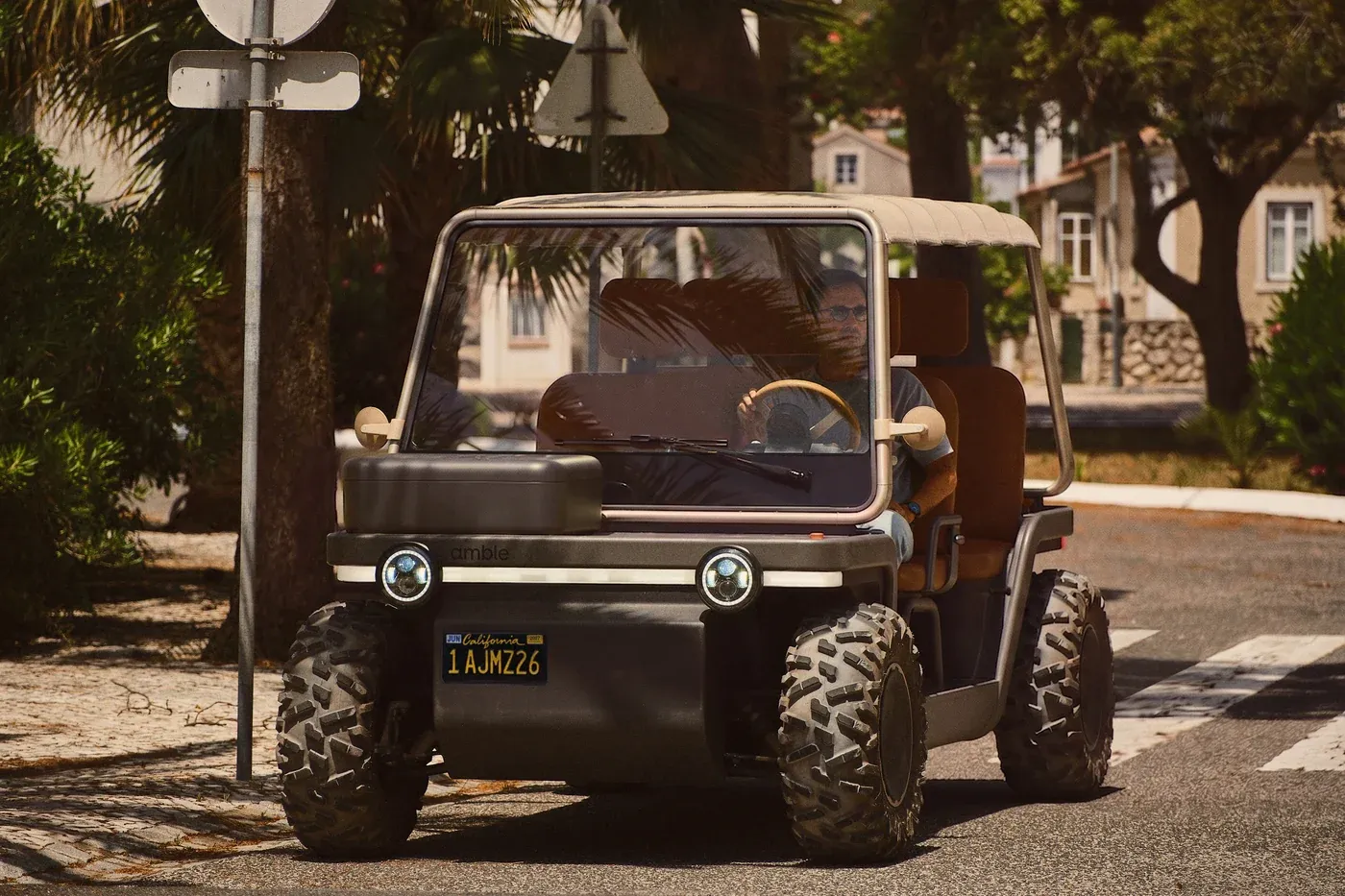
Amble is a startup that recently revealed their debut vehicle, a street-legal golf cart with modern, utilitarian industrial design. The specs don't really matter, nor the price. It's capable enough and pricy for what it is. I'm stoked about it because I'm convinced it'll pump energy into the stagnant "LSV" market, and that could turn the tide of how we navigate our cities for the better.
Cars have an enormous cost to our society. I'd be happy to pull you into another room and tell you all about it. Once the wool is off your eyes, it'll drive you to madness. But I've always preferred to praise the alternative than to lecture about the incumbent. Life without cars should be beautiful, and golf carts can notch one more gap in the spectrum of alt transport.
LSVs are "Low Speed Vehicles," which is what the U.S. calls street-legal golf carts. They're limited to a maximum of 25 mph, and allowed on roads with a speed limit of 35 mph and below. They have basic safety equipment and still require registration and insurance. These vehicles excel in relatively compact, chill communities like beach towns. Load up the cart with surfboards and pile in for a quick trip to the shore. Say hi to neighbors along the way. That's Amble's native habitat.
The company was founded by veteran designers in beautiful, sunny Portugal. It's the brainchild of former investment banker José António Uva, who owns a boutique resort in wine country. He was dissatisfied with available carts and their regrettable quality—somehow tolerated in an industry where every touchpoint should be elevated.
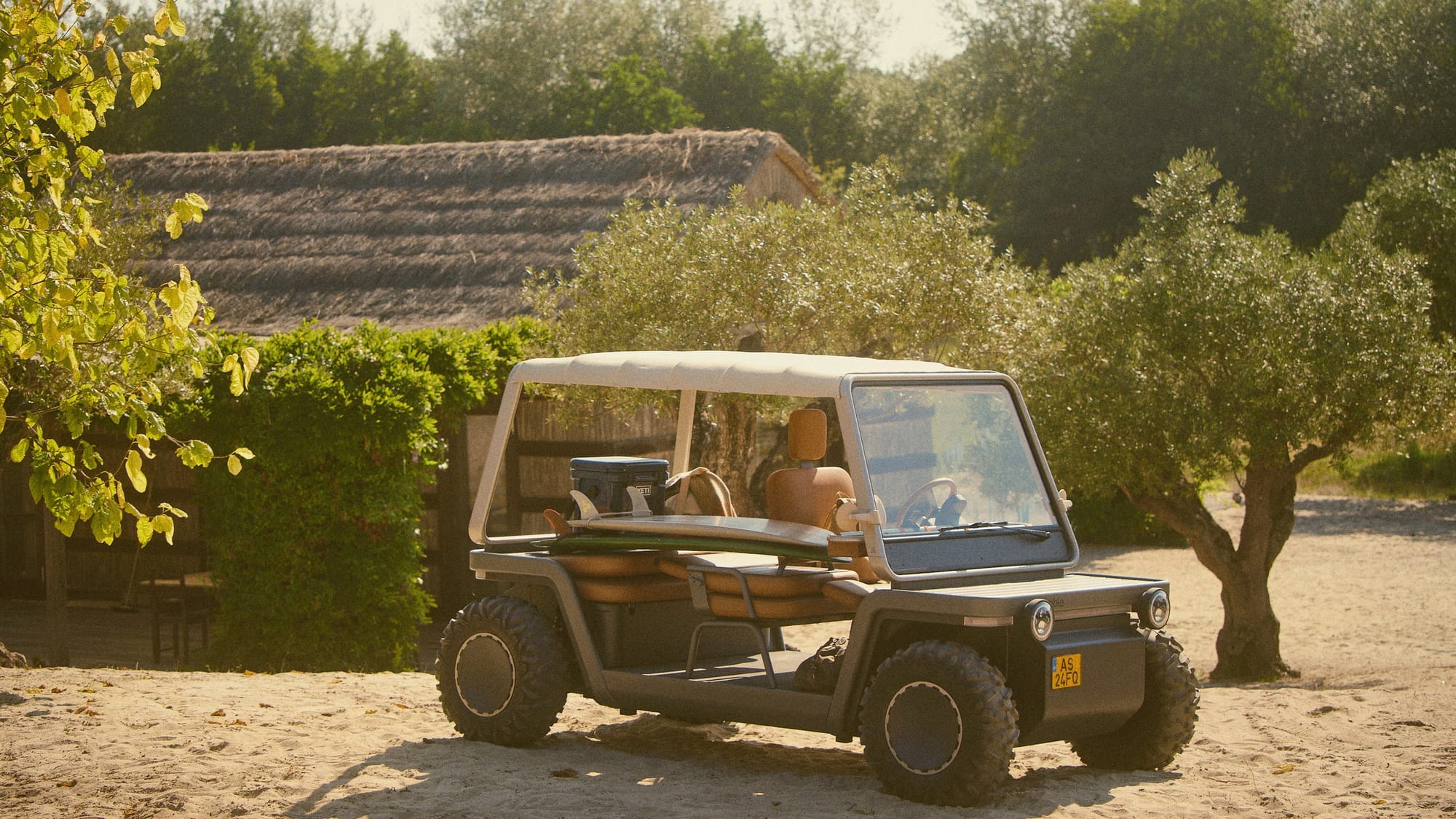
The Amble One completely overhauls the plastic appliances you're used to seeing driving on the green. The design is clean, with a boxy metal frame and thoughtful materials like cork and canvas. They're clearly thinking a lot about modularity and utility. The seats fold to accommodate gear. The dashboard bar diameter matches motorcycle handlebars for accessory compatibility. But unlike some macho truck, it's incredibly playful. It has a friendly face and an open cabin. Like if Rivian and Fred Flintstone built a moon rover.
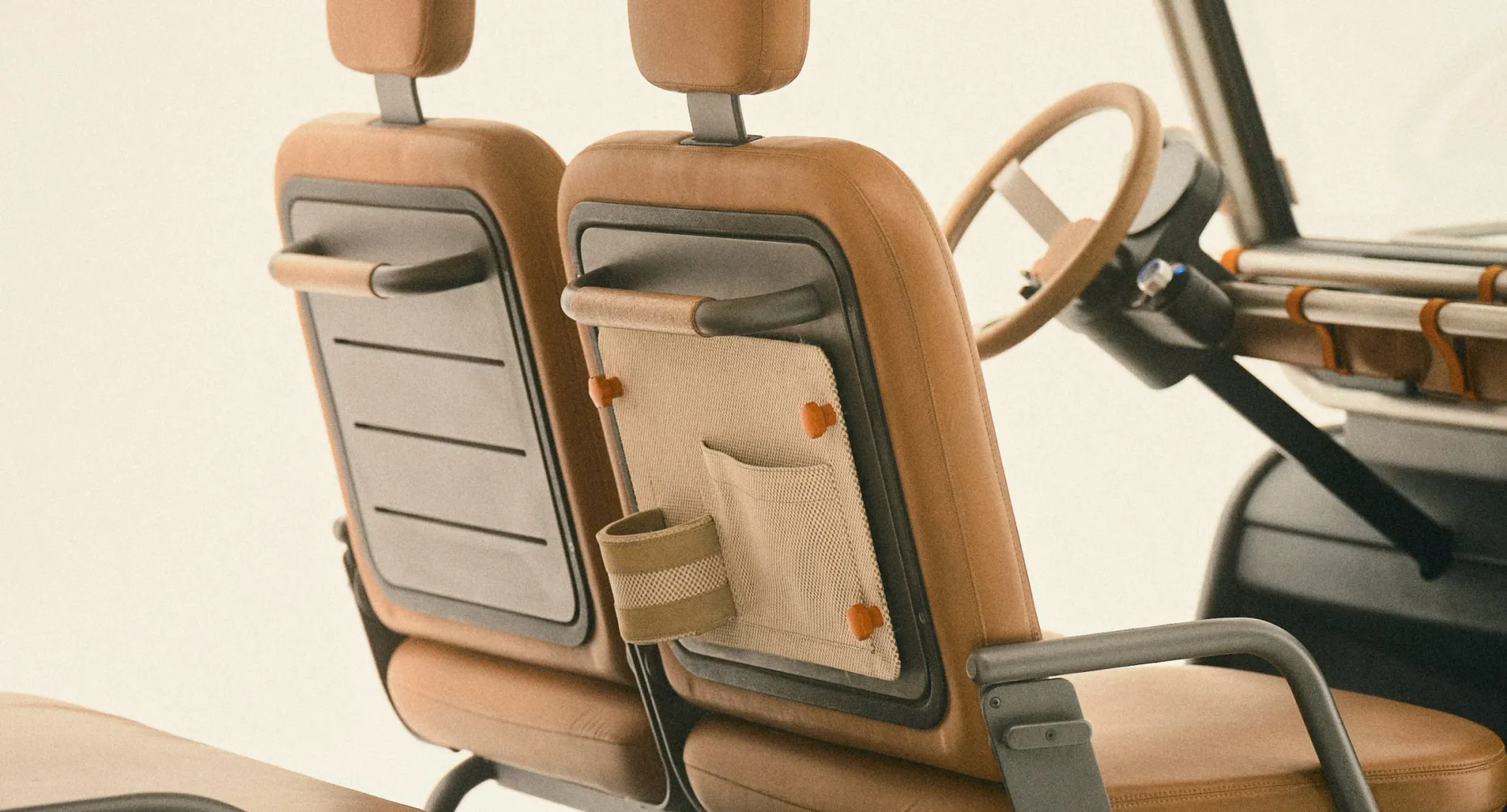

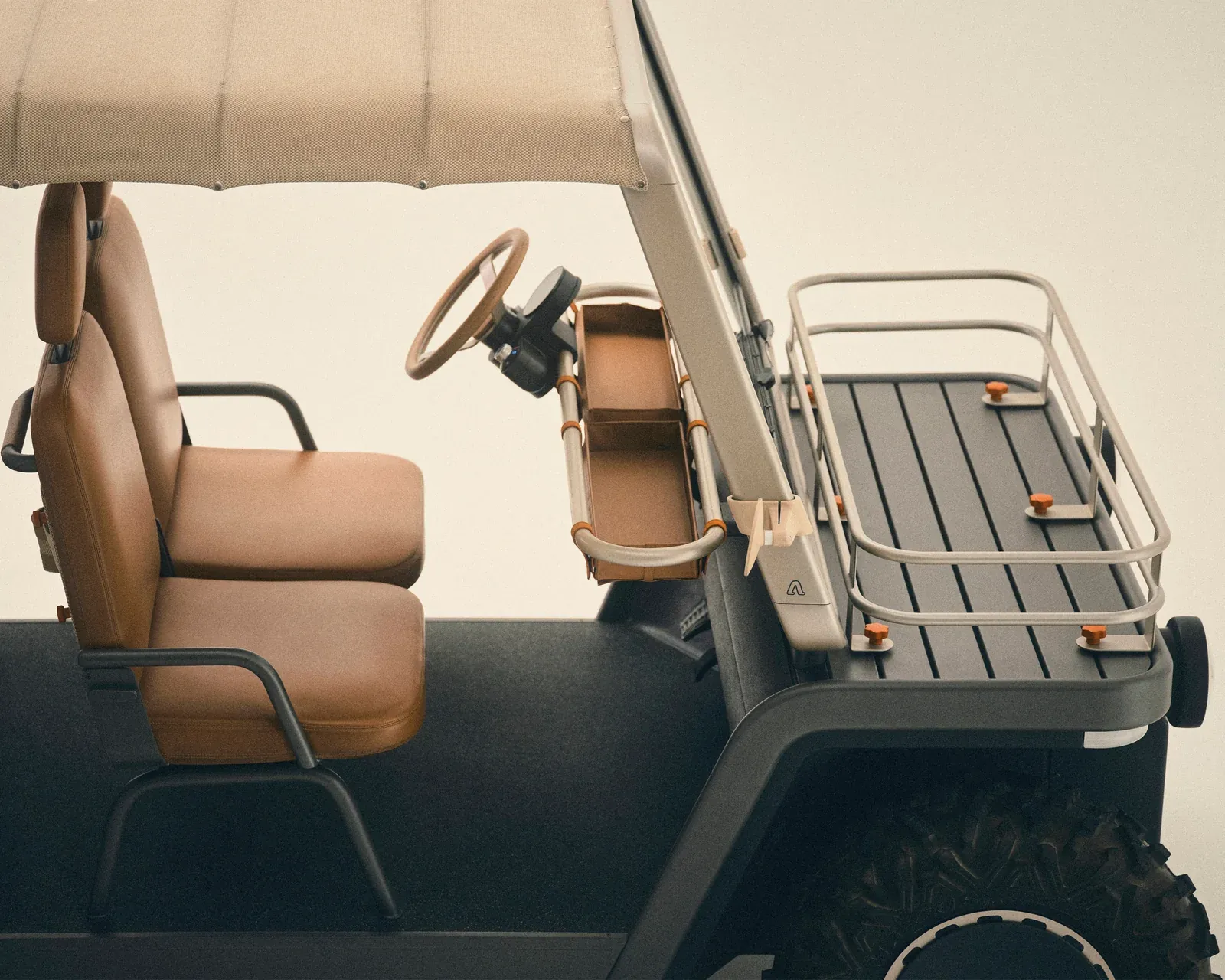


Photos: Amble
It's easy to picture Amble One at luxury resorts, where first shipments are bound, but LSVs could replace a huge percentage of car trips. The majority of trips by car are short, and a cart would be more than appropriate. They seem safer than a bike, protect you from the elements, and can carry the whole entourage. Amble will also release versions with a cargo box and a pickup bed.
However, do they actually address any of the issues with cars? The Amble is nearly as big as a small car, even if it weighs under 1,000 pounds. It's really all about speed.
As a pedestrian, the weight and speed of cars whizzing by on a busy road mentally convert into a moat, an uninhabitable space endlessly subdividing our cities. But on a low-speed residential road, that space feels more hybrid. Children can borrow it for a game of wiffle ball. It might even be considered a "neighborhood greenway" where bikes are more comfortable without any dedicated infrastructure. (See Portland's program for that.) Speed is such a big contributor to safety, my town recently lowered the speed limit of all residential streets and neighborhood collectors from 25 mph to 20 mph, dramatically reducing potential crash fatalities. With their lighter footprint, LSVs can share this space naturally.
Some cities have dedicated multi-use paths for carts that are shared with pedestrians and cyclists. Peachtree City, Georgia is a remarkable planned community where this is reality, with over 100 miles of paths, making carts a primary source of transportation for daily life. It sounds sweet, and I'd love to experience it in person, but I grew up walking a path shared with golf carts. They're fine sporadically, but at a certain point, it would reduce everyone else back to second-class road users.
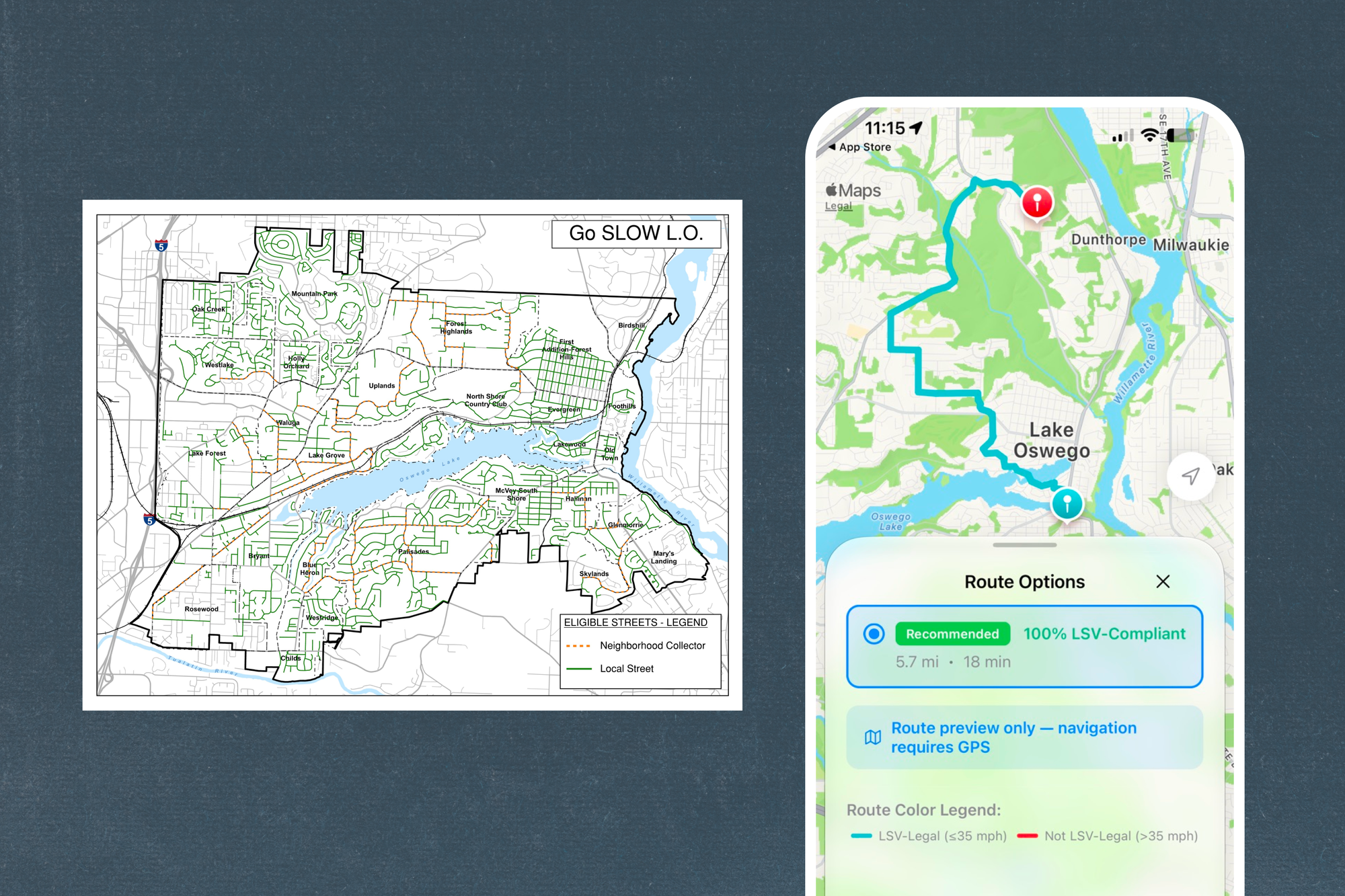
Instead, our cities already have extensive networks of low-speed roads. My town's 20 mph roads? 80% of the network! Any key gaps can be patched with lower speed limits, but—very importantly—they should be reinforced with traffic calming measures like chicanes. There's even a navigation app that routes you on LSV-compliant roads.
City nerds like me can admire progressive cities like Amsterdam, but there's a vision better suited to suburban America: "Every neighborhood a vacation town." Cute main street. Daily essentials nearby from local businesses. Americans love that shit. Mackinac Island is a quaint car-free town in Michigan, where cars were banned in 1898 because they were scaring the horses. It may sound funny to cite idyllic tourist towns, but they're often dense because they're clustered around some natural beauty. They're walkable for tourists who may not have cars. And they value experience over industry. Look at Avalon on Catalina Island. Can't that be an urbanist vision?
People also intuitively understand this with college campuses. They're designed for pedestrians first, with carts as a fallback. They have walkable amenities and are fairly dense, but extremely livable. I would kill for my neighborhood to feel like a college campus. So bring the LSVs first, and maybe then we can make roads more narrow, change surfaces to cobblestones, and add bodegas on the corner.
My city is primed for this vision. It's a wealthy suburb with lots of chill secondary roads. I get all over town on my bike avoiding busy thoroughfares. LSVs are even occasionally spotted shuttling families from their homes down to easements on the lake. Yes, there's a lake. We get clowned on a lot for being exclusionary, but I feel the town is highly redeemable, with a lot of progressive people who would embrace changes that fit the "character" of their neighborhood. We're currently in-filling our downtown with cottage clusters and row homes, and patching a gap in the pedestrian trail along the river. Yes, there's a river too.
We were just missing this. A desirable, 1:1 alternative to cars. The whole point of a "halo car" is to boost the profile of a brand, showcasing their design and engineering prowess. Even if the Amble One is out of reach for most, I predict it'll ignite interest in LSVs more broadly. My town has an electrification fair. Give me an Amble and a map of the town's network, and I guarantee I'll sell the vision. Finally replace that old clunker. Get your teenager one instead of an Audi. The Joneses aren't impressed by your Tesla anymore. The Amble will turn heads.
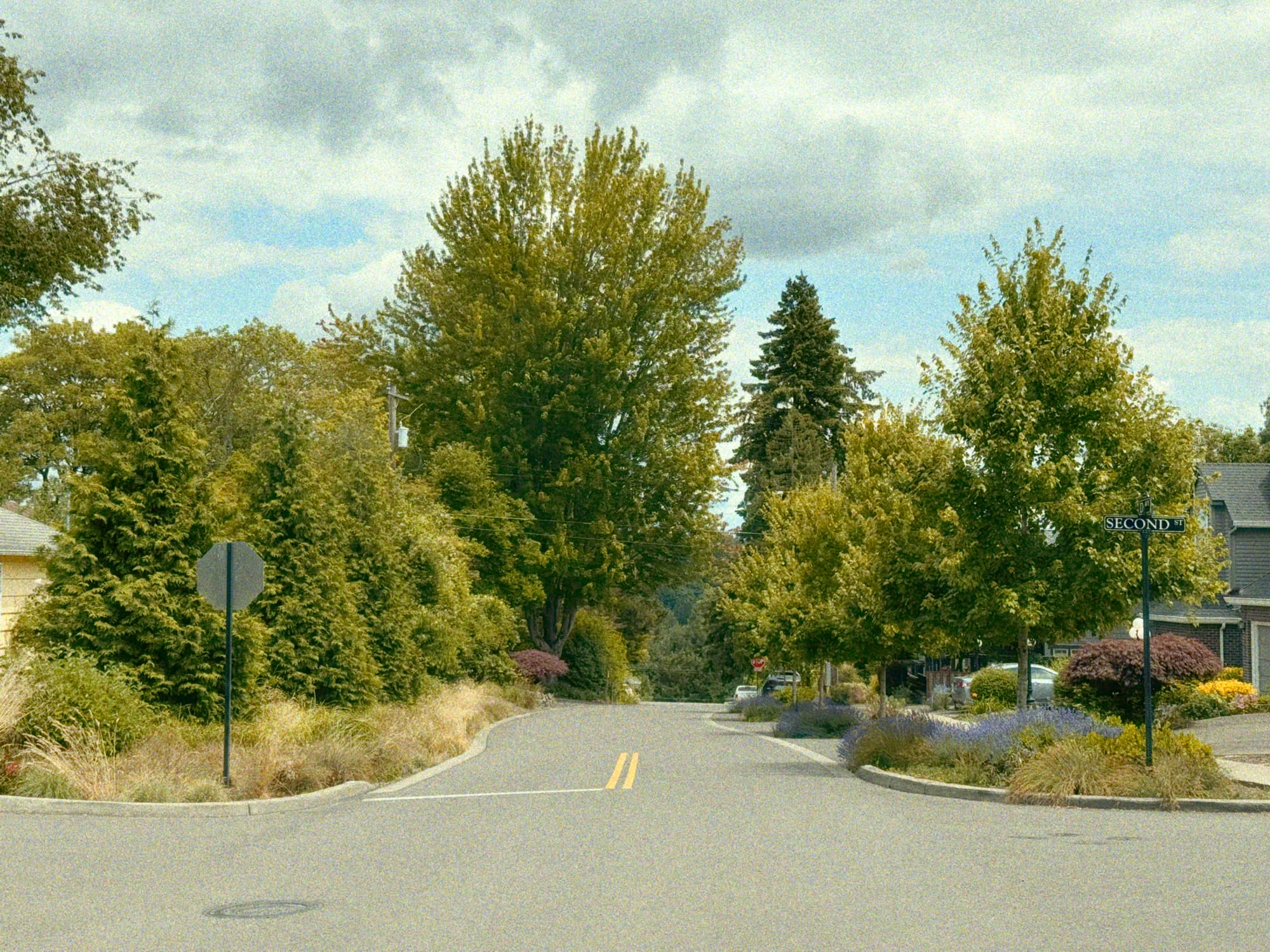
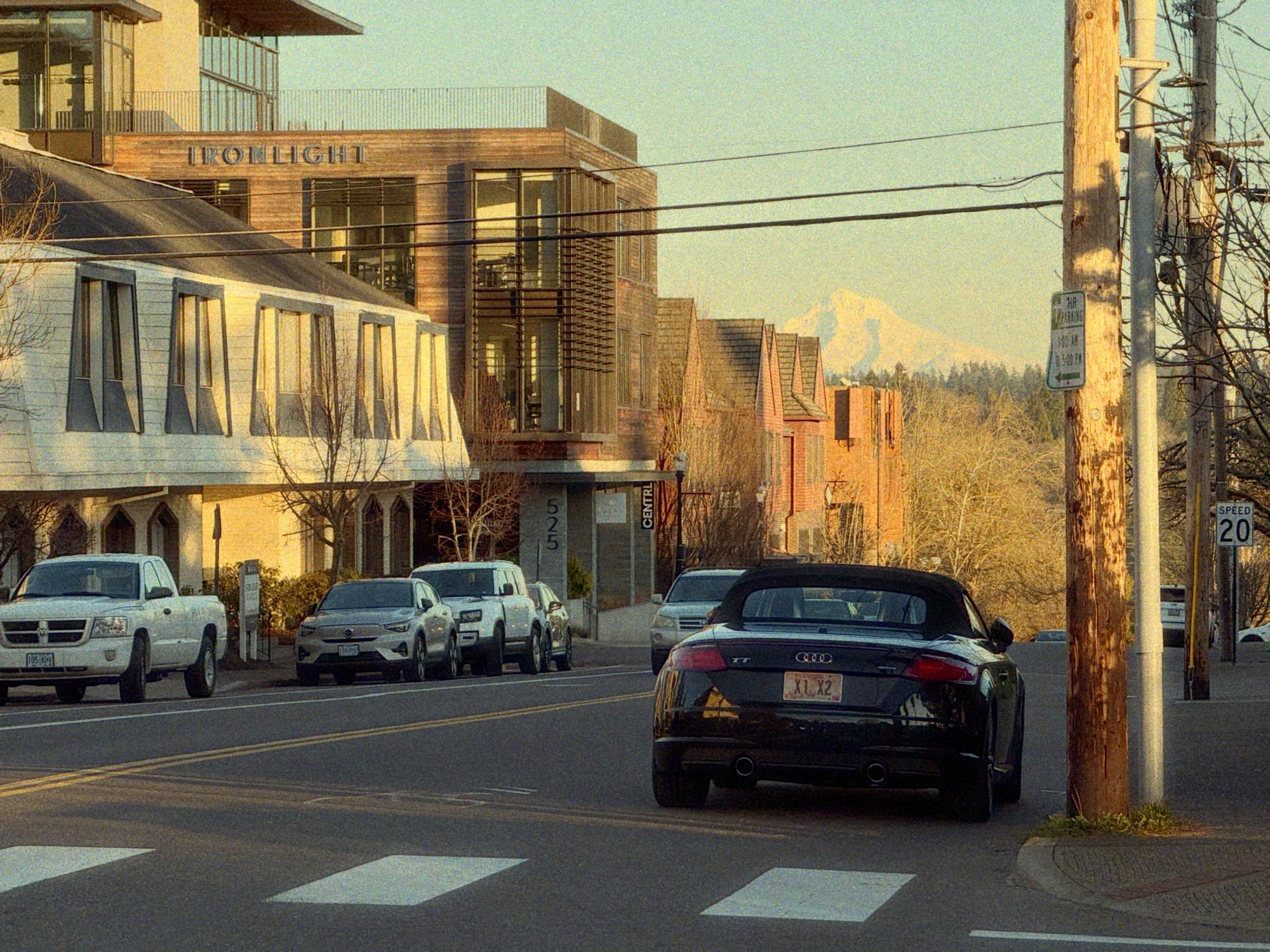
Low-speed roads around Lake Oswego.
Most people don't enjoy driving anyways! Cars are isolating. They're an arms race of speed and size. They're anti-social because in your car, you aren't you; you're an avatar of a 3,000+ pounds machine navigating a world of inhuman scale. And they build ugly, loud, and dirty cities that sprawl wider and wider more to get away from each other's cars than each other.
We should come back down to Earth. I appreciate how Amble articulates this in their philosophy. "A lightweight vehicle changes how people move through a place. You notice the air. You hear the people around you...And in places that embrace this kind of movement, something shifts. People slow down, talk more, and rediscover the pleasure of getting somewhere without rushing."
Rediscover the pleasure of getting somewhere without rushing.
LSVs aren't the answer to everything. I'm more partial to bikes, streetcars through grassy medians, and my own two feet. But I won't deny alt transport isn't always easy. Carts bring a lot more folks into the conversation, especially well-off folks who can jumpstart the industry like they did with EVs and eBikes. Low-speed roads all over America can be drafted into a vision of neighborhood urbanism that knits our communities a bit tighter.
I would also love to borrow an LSV to make a video living with it around my town. If any cart dealer in the Portland area wants to participate, please reach out.
What are your thoughts?! Could you see this in your town?


Discussion